"My father is the designated chai maker. He has been making tea for the family for 40 years. At 6 AM sharp, the sound of the pressure cooker whistling and the spoon clinking against the steel glasses signals us to wake up. We sit in a sleepy circle on the sofa, staring at the news on TV, passing the Parle-G biscuits. No one speaks for the first ten minutes. It is our silent ritual of togetherness." 8:00 AM – 10:00 AM: The School & Office Rush This is pure chaos. Homework is found crumpled at the bottom of a school bag. A tie is missing. The tiffin box (lunchbox) is being packed with roti and sabzi. Mothers turn into air traffic controllers. "Have you taken your water bottle?" "Did you finish your math?" The father is honking the car horn downstairs, anxious about the commute. 1:00 PM – 3:00 PM: The Lunch Break In Western cultures, lunch is a quick sandwich at a desk. In an Indian family lifestyle, lunch is an event. If the father comes home from the office (common in smaller towns), the table is set with dal, chawal, sabzi, roti, pickle, and papad . If not, there is the "tiffin service"—a network of dabbas (steel containers) carrying home food to offices and colleges.
But it is also the safest net in the world. When you lose your job, you move back home. No questions asked. When you get divorced, the family rallies. When you succeed, everyone dances.
This article dives deep into the daily rhythm of Indian family life, from the 5 AM chai to the late-night gossip on the terrace, exploring the rituals, struggles, and the beautiful madness that defines it. The classic image of India is the joint family —grandparents, parents, uncles, aunts, and cousins all under one sprawling roof. While urbanization is pushing families toward nuclear setups, the values of the joint family remain. In cities like Mumbai, Delhi, or Bangalore, a "nuclear" family often lives in the apartment next door to the grandparents or calls them twice daily. "My father is the designated chai maker
In an Indian home, you learn to negotiate. You learn that your personal space is flexible. You learn that happiness is a shared plate of samosas during a power outage, sitting by candlelight, telling stories.
The daily life stories of India are not written in history books. They are written in the steam of a morning chai , the click of a dupatta pin, and the laughter of cousins sharing one bed on a summer night. It is a lifestyle that, despite all its complexities, whispers one truth: No one fights alone. No one eats alone. No one lives alone. We sit in a sleepy circle on the
And maybe, that is the secret to happiness. Are you part of a modern Indian family? Share your daily life story in the comments below.
"Last night, we had a fight. My brother and I screamed at each other over the one bathroom. My father yelled at us for yelling. My mother cried. At 11 PM, I was lying in bed, fuming. Then I heard a knock. It was my brother. He held out a bowl of ice cream. ‘Mom’s leftover kulfi ,’ he said. ‘Sorry for the bathroom.’ We ate it in silence, watching the rain. No western apartment, no matter how big, has that feeling. The feeling of being so annoyed, yet so deeply, irrevocably loved." Conclusion The Indian family lifestyle is not a static museum piece. It is a living, breathing organism that is currently wrestling with globalization, career pressures, and evolving gender roles. It is loud. It is nosy. It is exhausting. Homework is found crumpled at the bottom of a school bag
When the world looks at India, it sees the Taj Mahal, Bollywood, and bustling tech hubs. But to understand the soul of the country, you have to peek inside an Indian home. The Indian family lifestyle is a unique organism—loud, chaotic, deeply traditional, yet rapidly modernizing. It is a world where three generations often share one roof, where the kitchen is the heart of the home, and where every day brings a small story worth telling.
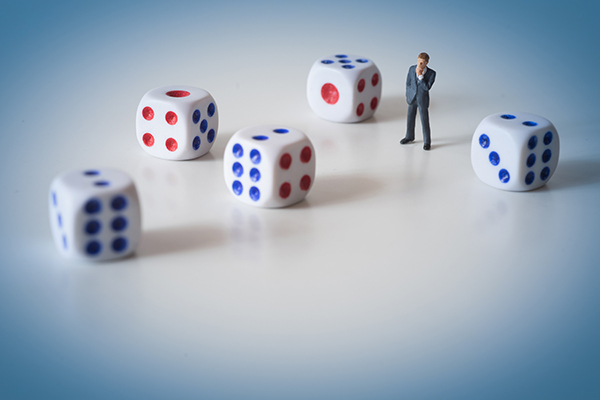
Probability calculations that can be used to inform decisions and manage risk can be very complicated. This unit is designed to help build your foundational understanding of probability and introduce you to some of the techniques that are used to calculate very difficult probabilities. You will continue to work with the Games Fair interactive tool and be exposed to real world situations to start to realize the impact of probability in your world.
The focus of this unit is on Probability Distributions. You will learn how to display all of the outcomes of a probability situation in a table and a bar graph. You will learn some formulas that will work with some situations. A large part of the unit will be calculating the expected value, or average, of a probability situation. The Games Fair Interactive tool will be used throughout the unit and will provide a focus for the summative and lead up to the Culminating Assignment, the Games Fair.
Probability calculations that can be used to inform decisions and manage risk can be very complicated. This unit is designed to help build your foundational understanding of probability and introduce you to some of the techniques that are used to calculate very difficult probabilities. You will continue to work with the Games Fair interactive tool and be exposed to real world situations to start to realize the impact of probability in your world.
After much work to collect valid and reliable information in the form of statistics, you will learn to analyse the statistics to make conclusions that can help make decisions. You will explore one real and two variables statistics using the World Map Interactive tool. A data set used will include a perceived quality of Health Care across Canada. The unit summative will be require you to act as a consultant for a large Canadian franchise to help them make a decision.

In Unit 3 of this course, you demonstrated how to represent the distribution of a discrete random variable. This unit will look at the distribution of continuous random variables and how they are compared to discrete variables. In the third and fourth activity, you will be introduced to what may be the most important mathematical function: the normal distribution.
In this unit, you will consolidate the concepts and skills you have learned throughout this course. You will complete the course culminating activity, through which you will analyze the impacts of energy transformation technologies on society and the environment.