Welcome back!
Ready to check out?
You're just one click away from fantastic style and even better savings!
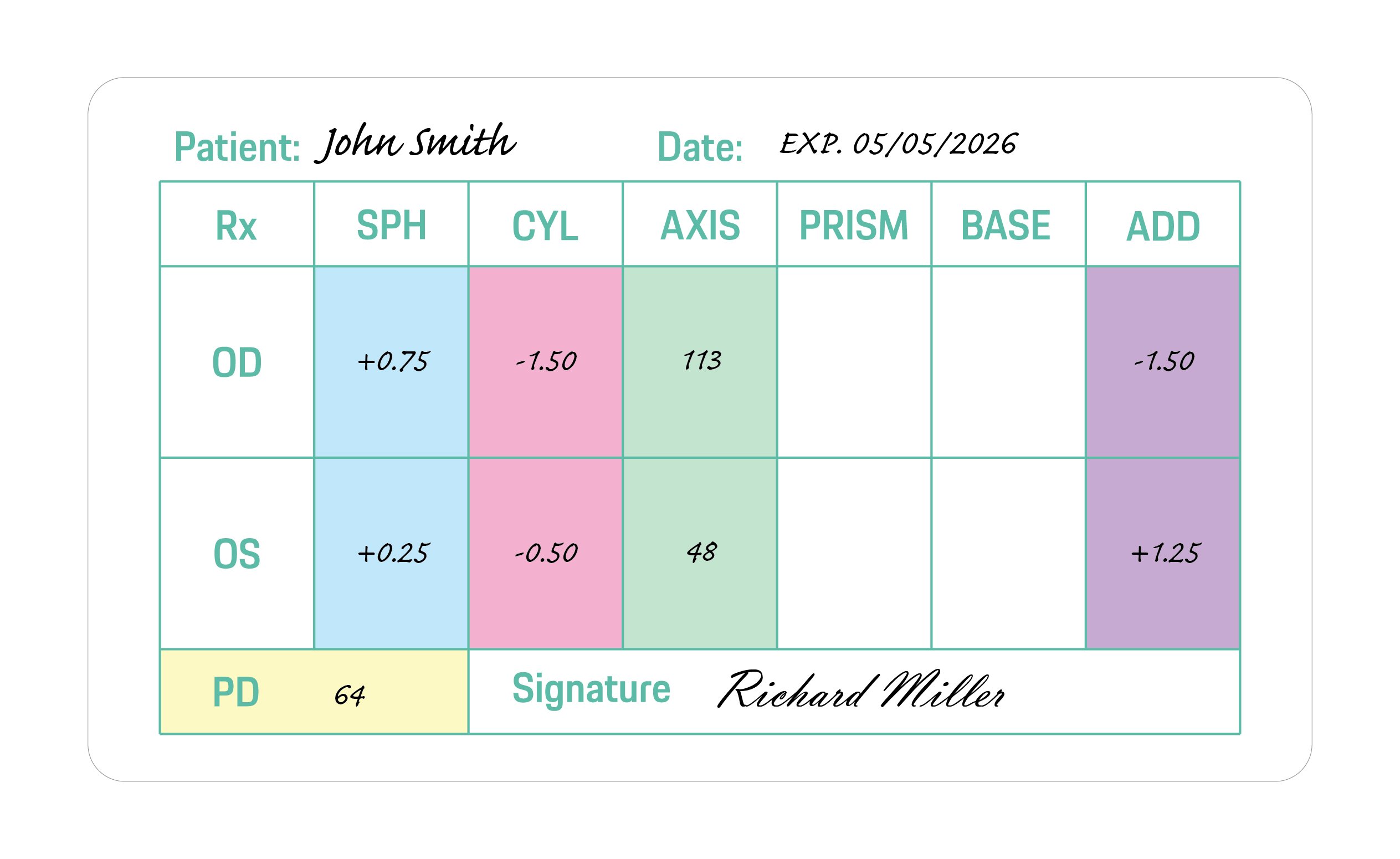
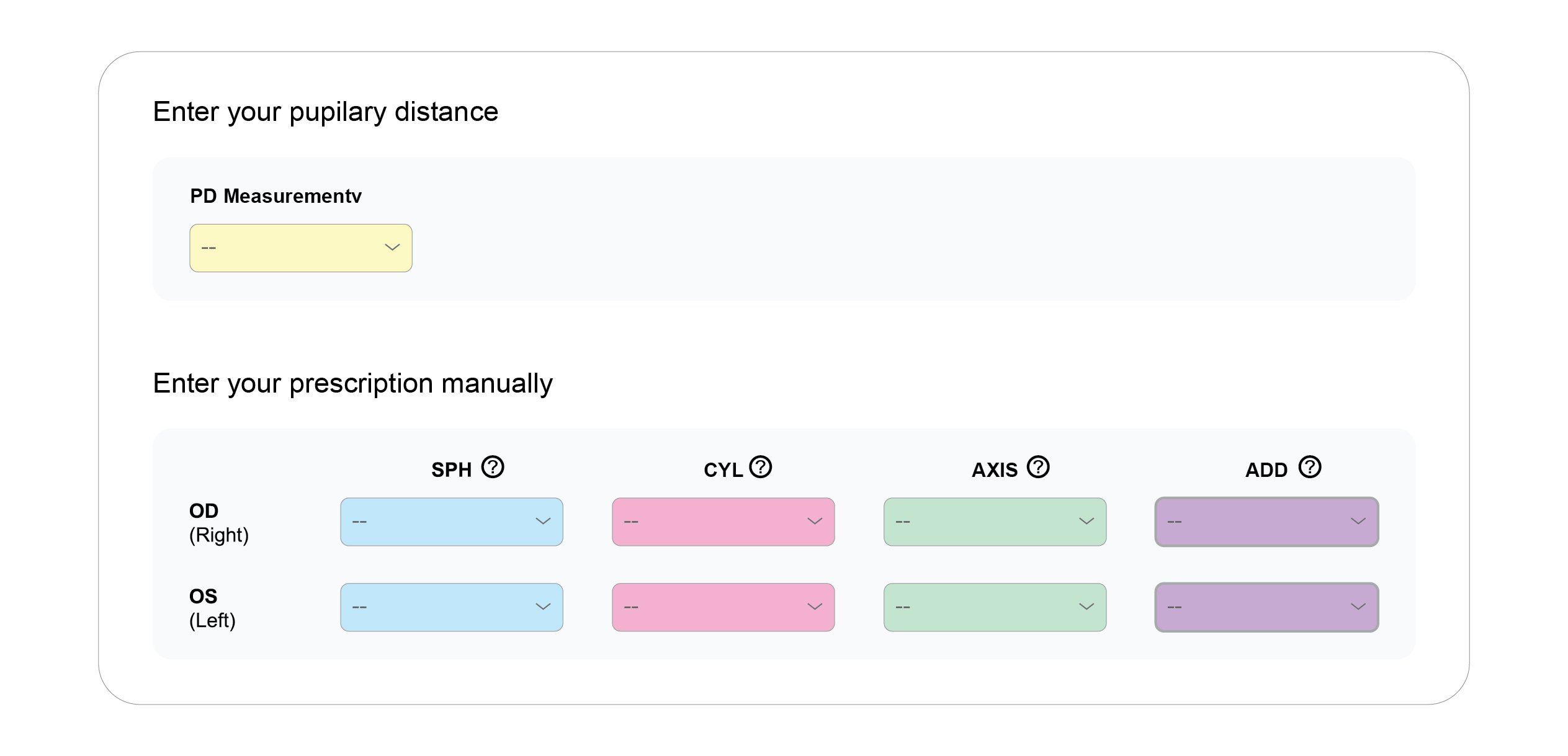
OD is an abbreviation for the Latin term oculus dexter which means right eye. Notice that the right eye information is asked for first even though we typically read from left to right.
OS is an abbreviation of the Latin oculus sinister which means left eye. That will be referenced on the far right column of the prescription.
SPH is short for sphere. The sphere of your prescription indicates the power on the lenses that is needed to see clearly. A plus (+) symbol indicates the eyeglass wearer is farsighted. A minus (-) symbol indicates that the eyeglass wearer is nearsighted.
CYL is short for cylinder. The cylinder indicates the lens power necessary to correct astigmatism. If the column has no value (is blank), it indicates that the eyeglass wearer does not have astigmatism. If this is the case on your prescription, you can leave it blank when entering it in.
AXIS is a prescription will include an axis value for those with astigmatism. This number represents the angle of the lens that shouldn't feature a cylinder power to help correct your astigmatism.
ADD is short for "additional correction." This is where details about bifocals, multifocal lenses or progressive lenses would appear.
I can create a comprehensive article that discusses the representation of sex and sexuality in manga, a popular form of Japanese comic books and graphic novels. This article aims to provide an informative and nuanced exploration of how manga approaches themes of sex and sexuality, impacting both its audience and the broader cultural landscape.
The manga industry faces challenges related to censorship and regulation. In Japan, there are guidelines and laws governing the publication of explicit content, especially when it comes to minors. Internationally, manga content can be subject to local laws and regulations, sometimes leading to censorship or the creation of censored versions. manga s e x
Manga, with its rich visual storytelling and diverse genres, has become a significant cultural export of Japan, captivating audiences worldwide. One of the complex and intriguing aspects of manga is its depiction of sex and sexuality, which varies widely across different genres and target audiences. From ecchi (a genre focusing on erotic or sexual humor) to seinen (targeted towards adult males) and josei (targeted towards adult females), manga offers a broad spectrum of content that reflects, critiques, and sometimes challenges societal norms and values regarding sex and sexuality. I can create a comprehensive article that discusses
The history of manga is long and varied, with roots tracing back to post-World War II Japan. Over the decades, manga has evolved significantly, reflecting changing societal attitudes towards sex and sexuality. Early manga often adhered to more conservative standards, but as Japan's cultural landscape shifted, so did its manga. The 1960s and 1970s saw a rise in more explicit content, especially in certain genres aimed at adult audiences. This evolution has continued into the modern era, with digital platforms and changing regulations influencing the types of content being produced. In Japan, there are guidelines and laws governing
Manga's portrayal of sex and sexuality is as diverse as the medium itself, offering a wide range of perspectives and experiences. While it can serve as a reflection of societal norms, it also has the power to challenge and shape them. As manga continues to evolve and reach global audiences, understanding its approach to these complex themes becomes increasingly important. By examining the cultural, historical, and social contexts of manga, readers and creators can better navigate the complex landscape of sex and sexuality in this influential art form.
The impact of manga on its audiences and society at large is multifaceted. For many readers, manga serves as an introduction to complex themes, including sex and sexuality. It can provide a safe space to explore these topics, offer perspectives on relationships, and foster empathy and understanding. However, critics argue that some manga can perpetuate harmful stereotypes, objectify women, or glorify certain behaviors.
*Discount applied on the current website price at the time of order. Offer only valid for new customer first contacts order over $10. Maximum discount of $100. Cannot be combined with any other offers. Promotions are subject to change without notice. We reserve the right to cancel orders that are in breach of the terms and conditions of this offer.



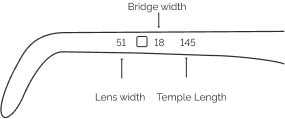
| Lens Width | Bridge Width | Temple Length | |
|---|---|---|---|
| XS | < 42 mm | < 16 mm | <=128 mm |
| S | 42 mm - 48 mm | 16 mm - 17 mm | 128 mm - 134 mm |
| M | 49 mm - 52 mm | 18 mm - 19 mm | 135 mm - 141 mm |
| L | >52 mm | >19 mm | >= 141 mm |
Buying eyewear should leave you happy and good-looking. Use our sizing tool to find frames that best fit your unique facial measurements.
Grab a regular card with a magnetic stripe on the back. Student IDs, credit cards and gift cards work well to start our online PD tool.
You may have received our paper PD measurement tool in your recent online order. In order to use this tool, place the ruler on your eyes so that the "0" lines up at the centre in between your eyes. Add up the two numbers, to get your PD. See example below:
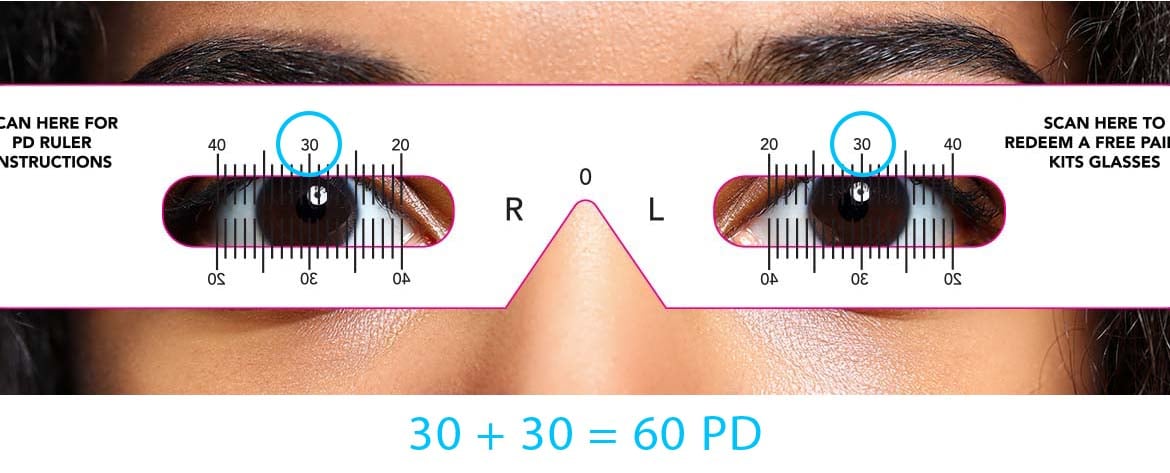
Click on this link to download and print your own PD measurement tool.
DOWNLOAD



 Check order status
 Place reorder
 Chat with us





 Use your insurance
 Help
Help