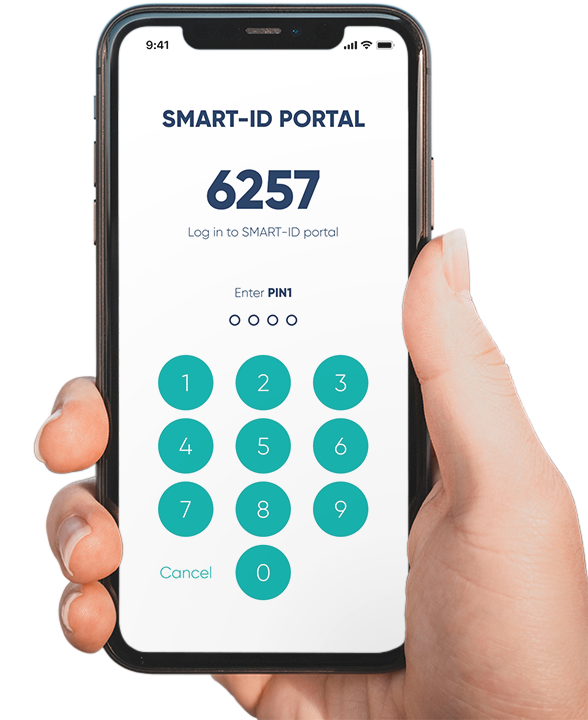
you can log-in to with Smart-ID app
Smart-ID is the easiest, safest and fastest way to authenticate yourself online, register in e-services and sign documents.
One strong solution for all of your identity needs: universal token for authentication and signing.
Find out moreFind out how our clients with Smart-ID changed their experience of digital services
Find out moreA unique aspect of the system is the existence of "Vernacular Schools" (SJK(C) for Chinese and SJK(T) for Tamil). These are public-funded schools that teach in Mandarin or Tamil while still following the national curriculum. Students here often have a heavier workload, especially in Chinese vernacular schools, which are notorious for long hours and intense math and science instruction. By secondary school, however, almost all vernacular students converge into national secondary schools (SMK), bridging the linguistic gap. A Typical School Day: From Assembly to Tuition The Malaysian school schedule is intense. Unlike the 9-to-3 rhythm of many Western nations, Malaysian schools often start early, with assembly at 7:15 AM sharp.
Classes typically run from 7:30 AM to 1:00 PM or 2:00 PM depending on the school session. Subjects are broad: Bahasa Melayu, English, Mathematics, Science, History, Islamic Studies (for Muslims) or Moral Studies (for non-Muslims), and Geography.
While urban students in Kuala Lumpur zoomed through fiber optic lessons, rural students in Sabah and Sarawak climbed trees or walked hours to find a signal. The pandemic forced the MOE to accelerate the DELIMa (Digital Educational Learning Initiative Malaysia) platform.
The pressure is immense. Newspapers run stories about "exam anxiety." Parents spend thousands on doa selamat (prayer gatherings) and extra tuition. For three months leading up to the SPM, school life transforms. Regular classes stop; students enter intensive "revision camps."
From the rhythmic chanting of the Rukun Negara (national pledge) to the frantic rush of co-curricular Saturday practices, Malaysian school life is a world unto itself. Here is an in-depth look at how young Malaysians learn, live, and grow. Modern Malaysian education is governed by the Kurikulum Standard Sekolah Menengah (KSSM) for secondary schools and its primary equivalent. The system is highly centralized under the Ministry of Education (MOE). Unlike the liberal arts flexibility seen in Western schools, the Malaysian curriculum is structured and exam-centric.

Convenient & fast
Simple user interface and fast-acting
Multi-device
Across device and multi-device usage
Secure
Innovative use of advanced cryptography and proven PKI
Cross-country usage
Same eID works across countries
Legally binding signatures
Qualified Electronic Signature level digital signatures
Compliant
EBA guidelines, eIDAS, GDPR and PSD2 requirements
A unique aspect of the system is the existence of "Vernacular Schools" (SJK(C) for Chinese and SJK(T) for Tamil). These are public-funded schools that teach in Mandarin or Tamil while still following the national curriculum. Students here often have a heavier workload, especially in Chinese vernacular schools, which are notorious for long hours and intense math and science instruction. By secondary school, however, almost all vernacular students converge into national secondary schools (SMK), bridging the linguistic gap. A Typical School Day: From Assembly to Tuition The Malaysian school schedule is intense. Unlike the 9-to-3 rhythm of many Western nations, Malaysian schools often start early, with assembly at 7:15 AM sharp. A unique aspect of the system is the
Classes typically run from 7:30 AM to 1:00 PM or 2:00 PM depending on the school session. Subjects are broad: Bahasa Melayu, English, Mathematics, Science, History, Islamic Studies (for Muslims) or Moral Studies (for non-Muslims), and Geography. By secondary school, however, almost all vernacular students
While urban students in Kuala Lumpur zoomed through fiber optic lessons, rural students in Sabah and Sarawak climbed trees or walked hours to find a signal. The pandemic forced the MOE to accelerate the DELIMa (Digital Educational Learning Initiative Malaysia) platform. Classes typically run from 7:30 AM to 1:00
The pressure is immense. Newspapers run stories about "exam anxiety." Parents spend thousands on doa selamat (prayer gatherings) and extra tuition. For three months leading up to the SPM, school life transforms. Regular classes stop; students enter intensive "revision camps."
From the rhythmic chanting of the Rukun Negara (national pledge) to the frantic rush of co-curricular Saturday practices, Malaysian school life is a world unto itself. Here is an in-depth look at how young Malaysians learn, live, and grow. Modern Malaysian education is governed by the Kurikulum Standard Sekolah Menengah (KSSM) for secondary schools and its primary equivalent. The system is highly centralized under the Ministry of Education (MOE). Unlike the liberal arts flexibility seen in Western schools, the Malaysian curriculum is structured and exam-centric.

Obtained local qualified status for authentication in Latvia
In the TOP 10 most used apps in Lithuania
Most loved digital tool brand in Latvia
Recognised as the most loved digital tool brand in Latvia based on the Brand Capital survey.
Enables Apple Watch support
for electronic authentication and signing directly through the Apple Watch.
Now available in Belgium
Smart-ID won joint 5th place as the most loved brand in Estonia
Smart-ID celebrates its 5th anniversary!
Smart-ID App user base grows to 3 274 621
Supports more than 700 e-services with authentication or for electronic document signing.
1500+ devices supported by Smart-ID app
Available platforms: App Store, Google Play, Huawei AppGallery.
Smart-ID app launched in India
App: Jio SecureID
The most reliable authentication solution in Baltic countries.
International study by SK ID Solutions (e-identity solutions provider) highlights Smart-ID as the most reliable authentication solution in Baltics.
1 billion Smart-ID transactions made this year
Smart-ID app released for Huawei AppGallery
Smart-ID is now also available for download by Huawei smartphone users
Smart-ID app launched in Iceland
App: Audkenni
Biometric registration method launched
Users can now register accounts by scanning their own travel documents.
State support for Smart-ID
All Estonian state services have full Smart-ID support and Smart-ID is used for age verification in Latvia.
Cloud signing
Adobe Acrobat Sign services now have Smart-ID support.
Secure authentication recognised
Smart-ID authentication schema was evaluated as „level high” in Estonia and Smart-ID support is added to all state services.
Smart-ID app reaches 2 000 000 users
Digital signatures
Becoming certified as QSCD means that signatures given with Smart-ID have the same legal standing as handwritten ones across European Union.
Breakthrough of the Year
Smart-ID wins ITL’s Breakthrough of the Year.
Prestigious awards
Smart-ID wins Service of The Year from Lithunian Industry Confederation and Silver in Estonian Design awards.
Smart-ID launch and reaches at first year 300 000 users